
Vienna
Family mysteries and the Galician oil industry

1918. 1946. These are the dates on my mind as I approach the train station in Vienna. I am here to meet my parents and my sister Emily, and to go on a “research tour” of the city.
My grandfather was stationed here in 1946, as a 2nd lieutenant in the US Army. So one of our first stops was the Hotel Bristol, the majestic hotel in central Vienna that served as the headquarters for the US Army after World War II. This is where my grandfather worked until he returned to the U.S. in December 1946.
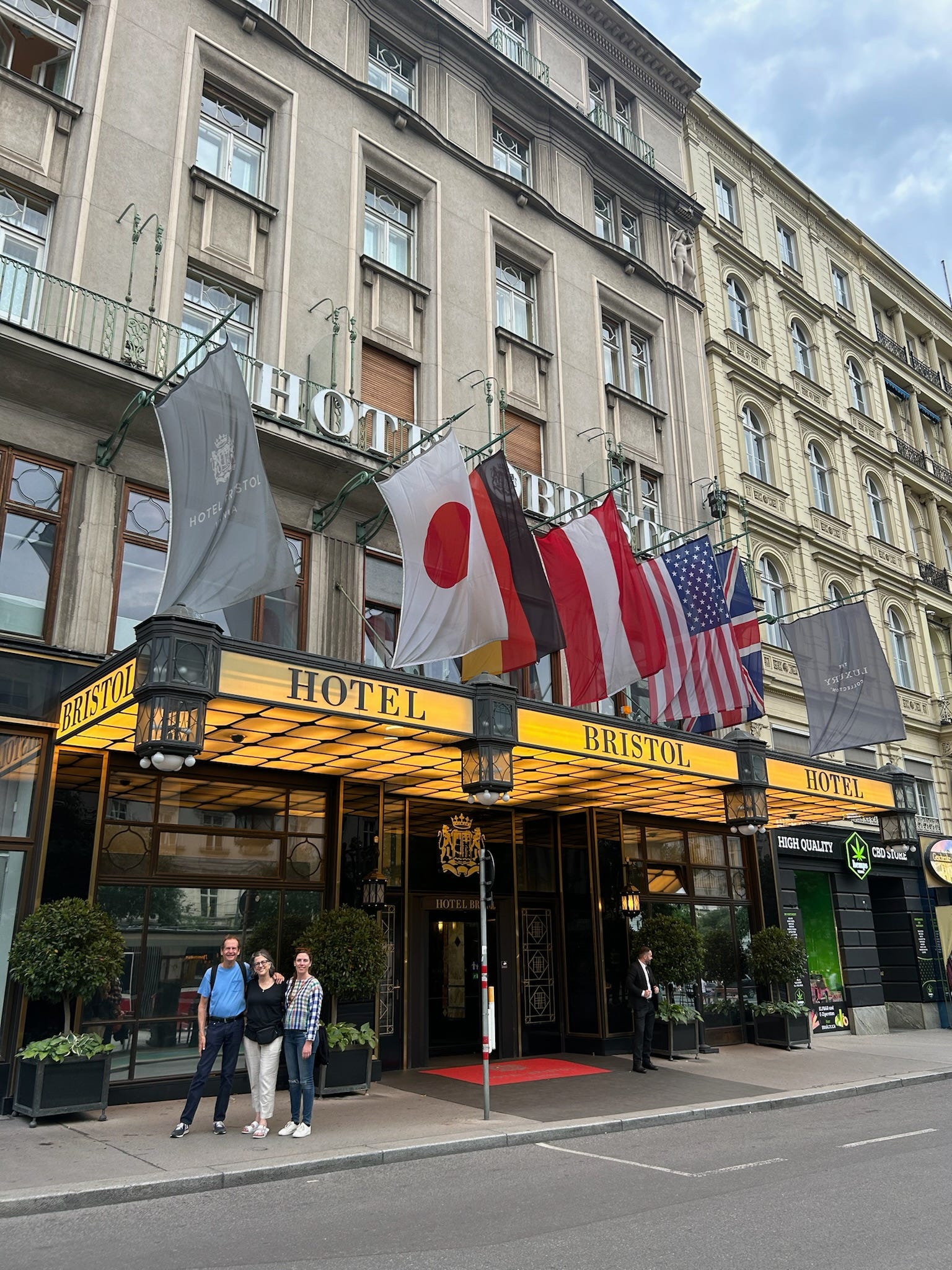
I don’t have a photo of my grandfather at the Hotel Bristol from 1946, but I do have one from 1990, when my grandparents traveled to Vienna and Budapest to show my parents, along with my aunt and uncle, important places from their past.
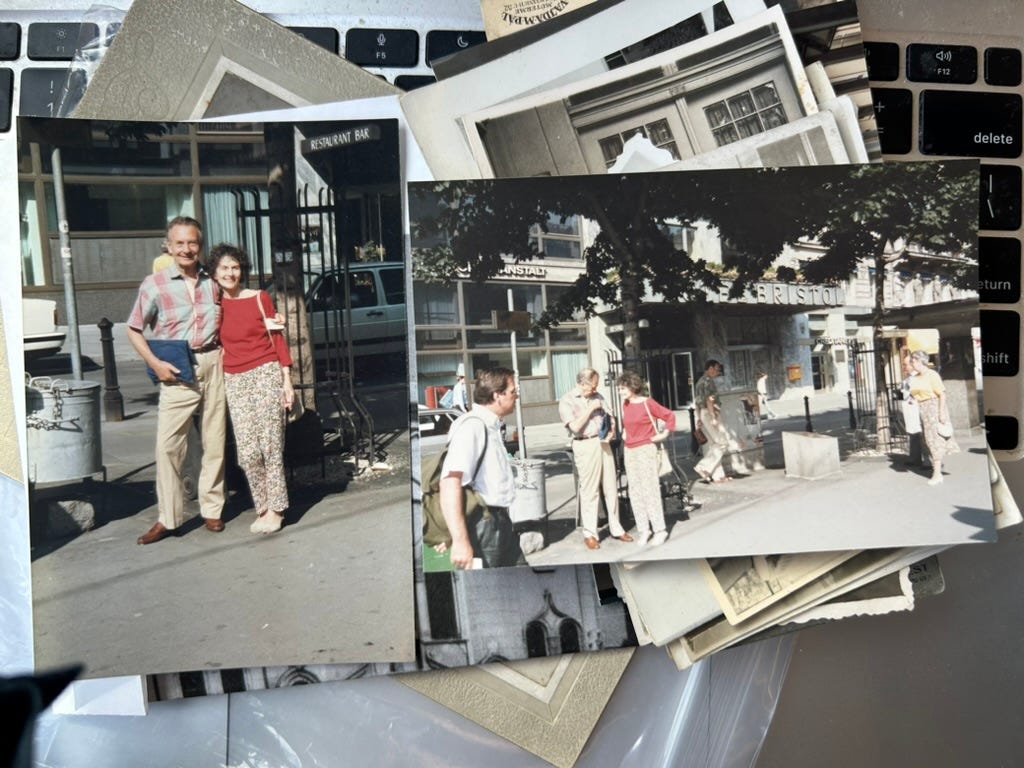
While Vienna was an important place for my grandfather, I associate it mostly with my grandmother. She was born in Vienna in 1918, and spent the formative years of her childhood here. As an adult, Omama continued to identify as “Viennese,” and she took great pride in the city. So most of my research in Vienna focused on my grandmother, Omama, and especially her family.
Omama’s mother, Gisela, was just 18 years old when my grandmother was born. Her father, Andor, was a 32-year old captain in the Austro-Hungarian military.
Three years later, in 1921, Andor and Gisela divorced, and my grandmother — for reasons that remain obscure — did not see her mother any more. According to family lore, Gisela “ran off with a White Russian.”
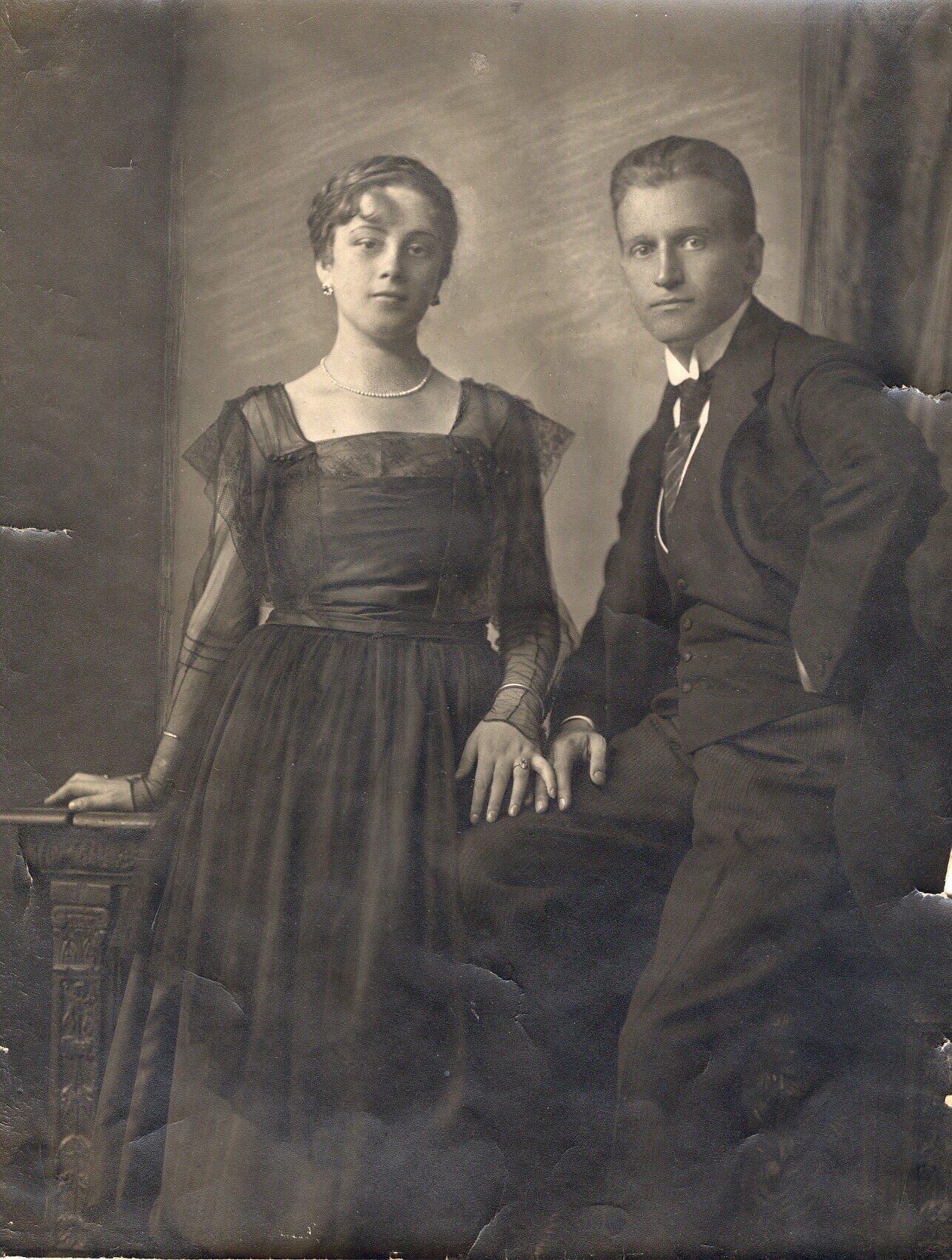
My grandmother had this photo of her parents, Andor and Gisela, displayed in their home in Ardmore, PA. I remember admiring it as a child and noting the placement of Gisela’s pinky between Andor’s fingers — how sweet and intimate a gesture that seemed. And yet, the marriage ended in acrimony.
I have always been curious about Gisela. What happened to her after she and Andor divorced? Why didn’t she stay in touch with her daughter? Did Andor forbid her or was it her own choice?
I haven’t been able to answer these questions, but I did find some clues and some interesting new leads in the Viennese archives. The first crumb came at the Israelitisches Kultusgemeinde Wien, the archives of the Jewish Community of Vienna. The archivists told me that Gisela had “left the Jewish community in 1921” following her divorce, but that her father, Joachim Kornhaber, was buried in the Jewish cemetery in Vienna.
I had never heard Joachim Kornhaber’s name until I saw it on my grandmother’s birth record, but he was easier to track down than his daughter, Gisela. Born in 1868 in Boryslaw, what is now the western Ukraine, Joachim Kornhaber emigrated to Vienna in the early 1900s along with his family: his wife, Klara, and his daughters, including the young Gisela. I searched his name in the Austrian newspapers, and found his death announcement in the Neue Freie Presse from 1926, when my grandmother was 8 year old:
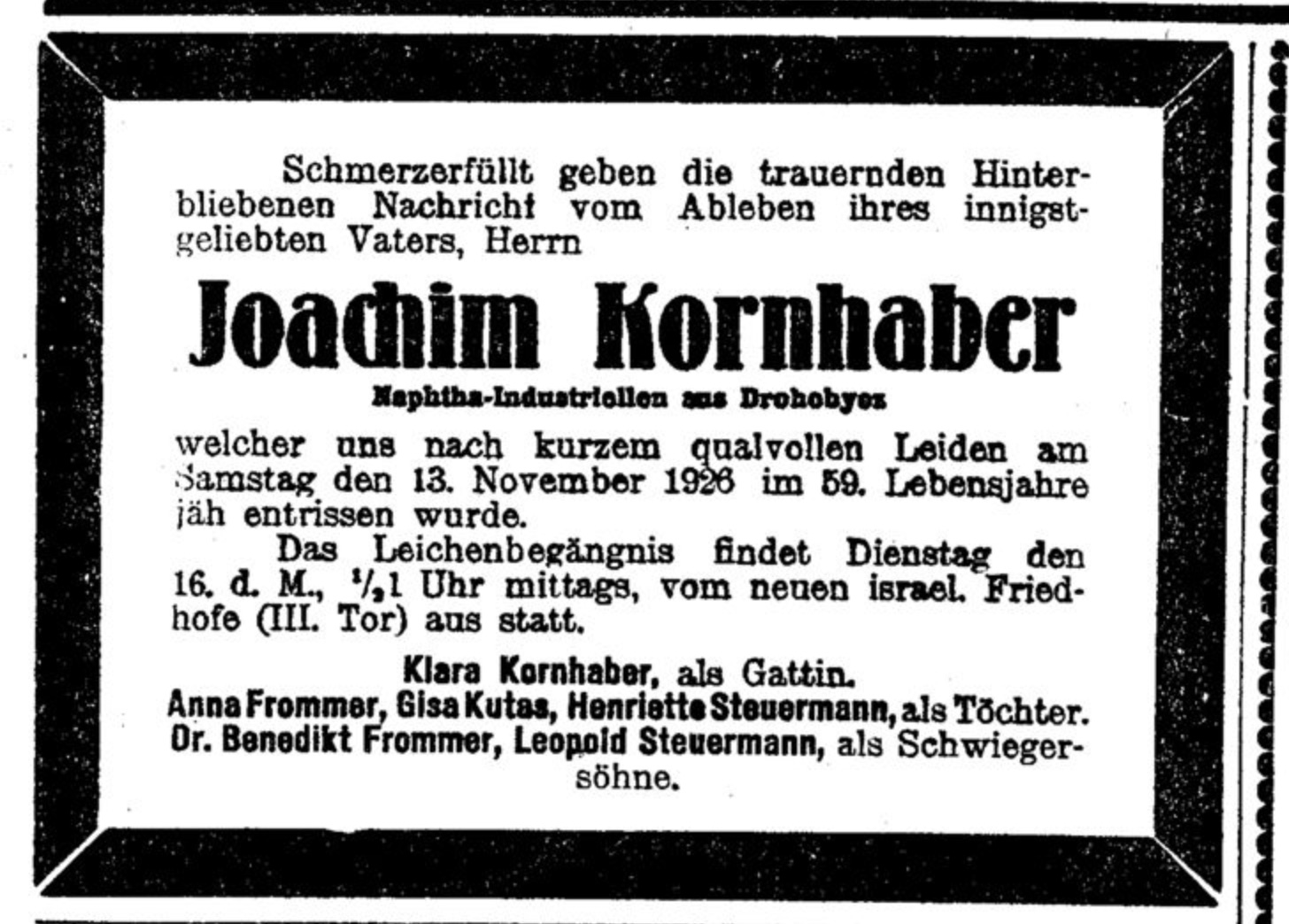
The death announcement described Kornhaber as a “Naphtha-Industriellen aus Drohobycz.” This is how I learned that Joachim Kornhaber was in the oil industry (!), importing Naptha — a petroleum byproduct used for oil lamps — from the eastern edge of the Austro-Hungarian empire. This information sent me on a rabbit hole learning about the petroleum industry in Galicia (now the western Ukraine) in the 19th century, which is pretty fascinating. I had no idea that one of the first oil rigs in the world was built in Boryslav in 1861 — just a few years before Joachim was born — and that the last decades of the 19th century saw a huge oil boom in the region: thousands of oil rigs were built, leading one historian to call Austrian Galicia an Oil Empire.
The other surprise in Joachim Kornhaber’s death announcement was that Omama’s mother, Gisela, was still listed as “Gisa Kutas” — her married name — even though she had been divorced for five years. She had not, as I had assumed, remarried quickly. Plus, she was still living in Vienna — not in Russia.
I had another research breakthrough when I visited the Wiener Stadt- und Landesarchiv, where I requested documents related to Joachim Kornhaber. One, the “Todsaufname,” included information about all family members as of 1926, and also had a copy of Joachim’s will, written in 1922.
According to the Todsaufname, Joachim Kornhaber left behind his widow, Klara, and three daughters: Anna, Gisela, and Henrietta. Anna, age 32, was married to a doctor and lived in Drohobycz, in what is now the western Ukraine. Gisela, age 28, was still listed as “Kutas,” and the document says she was “married to an engineer.” This is probably another reference to my great-grandfather, Andor. Five years after their divorce, she is still listed under his name. Her younger sister, Henrietta, was 21 years old, and was married to a businessman.
I felt an immediate affinity for a family with three grown daughters, since I am also one of three daughters. I wondered whether the sisters were close, what Anna and Henrietta thought about Gisela’s relationship with Andor, and whether they helped take care of my grandmother.
My parents, Emily, and I decided to visit the addresses where Gisela, Henrietta, and Klara lived in 1926. Their older sister, Anna, was back in Drohobycz, but Gisela, Henrietta, and their mother, Klara, were all within a couple miles of each other. Henrietta was living in the same house as her mother, Klara: Wien IV, Weyringergasse 31, just a couple blocks away from the Belvedere palace. Gisela’s address was listed as Wien VII, Stiftgasse 1, very close to the city center. I also had an address for my grandmother at the time: in 1926, when my great-grandfather Andor was traveling, he sent my grandmother a postcard addressed to “Neustiftgasse 3.”
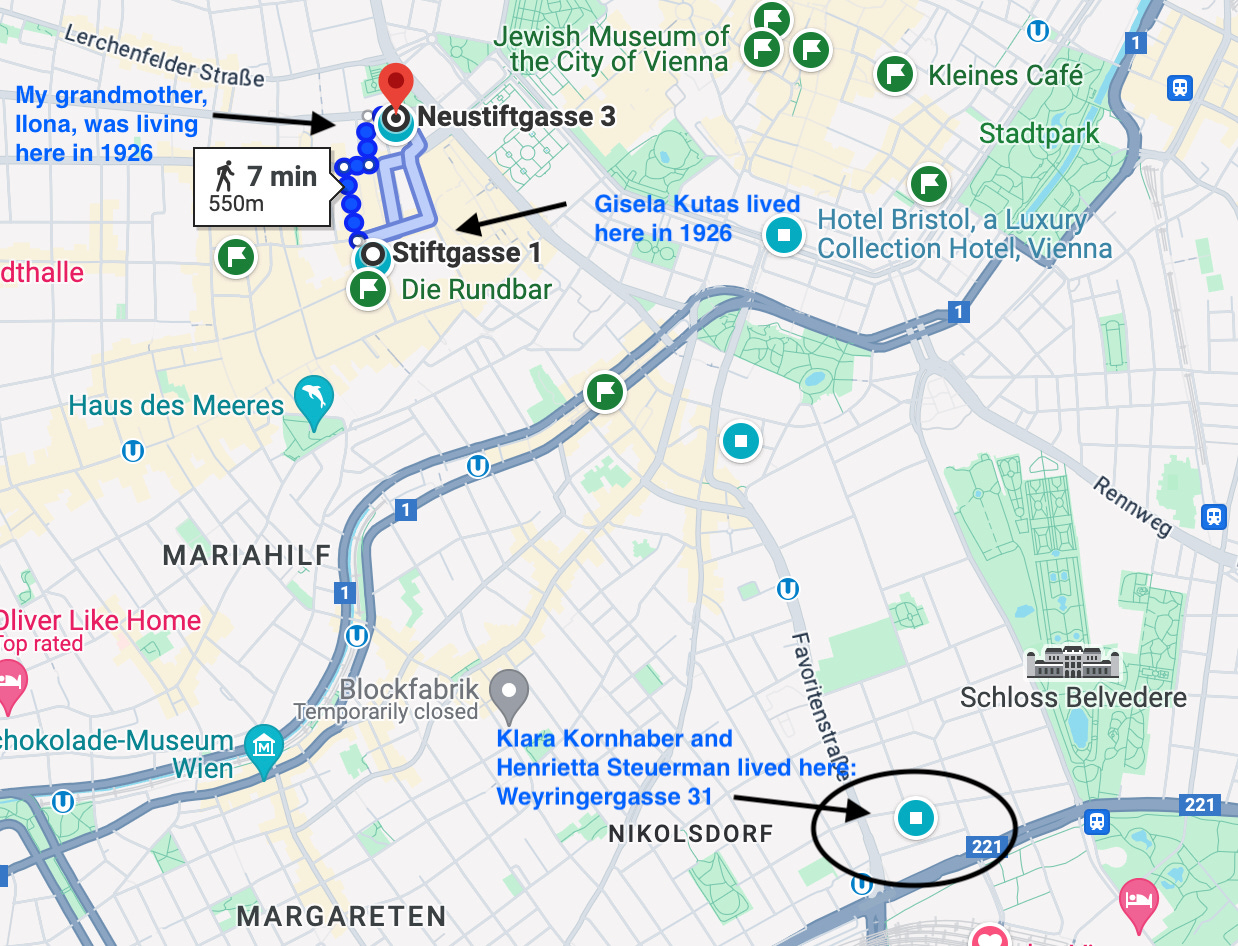
As we walked from place to place, we realized that Gisela was living just a few blocks away from her 8-year old daugher, Ilona. They were both about a 30 minute walk from Klara and Henrietta. All three locations were beautiful, though Gisela’s building was no longer standing. Still, we could see that she was living in a bustling, shopping area close to the city center.
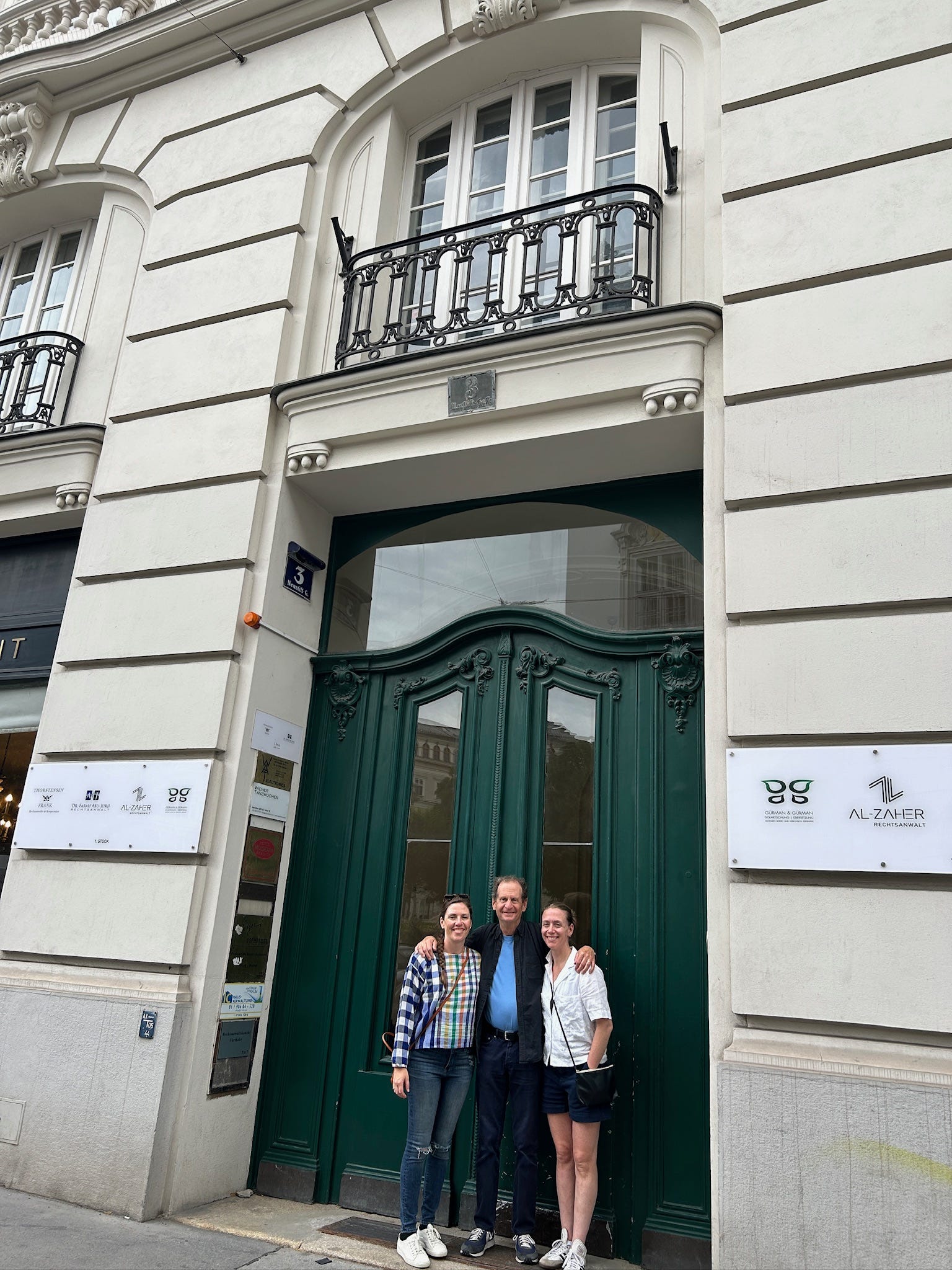
I thought about Gisela and Ilona living so close to each other in 1926 — but not together. It’s impossible to know exactly what happened, but Joachim Kornhaber’s 1922 will gives a hint about the acrimony between the two families. In his will, he wrote that while his granddaughter, Ilona, should receive an inheritance, if she died without an heir, her portion should never go to Andor — it should go back to Gisela.
It’s a sad story, and I will never know the full complexity of the situation. But my grandmother felt compassion for the mother she never really knew — she told my mother that Gisela had been so young, just 18 years old, when she married and had a child. I’m impressed with my grandmother, that she could look with understanding and compassion at her mother’s situation.
As I was writing this post, thinking about these difficult dynamics, I started flipping through family photos again, and came across this one: I realized that this was another picture of my great-grandmother, Gisela. She is a bit older, and still very beautiful.
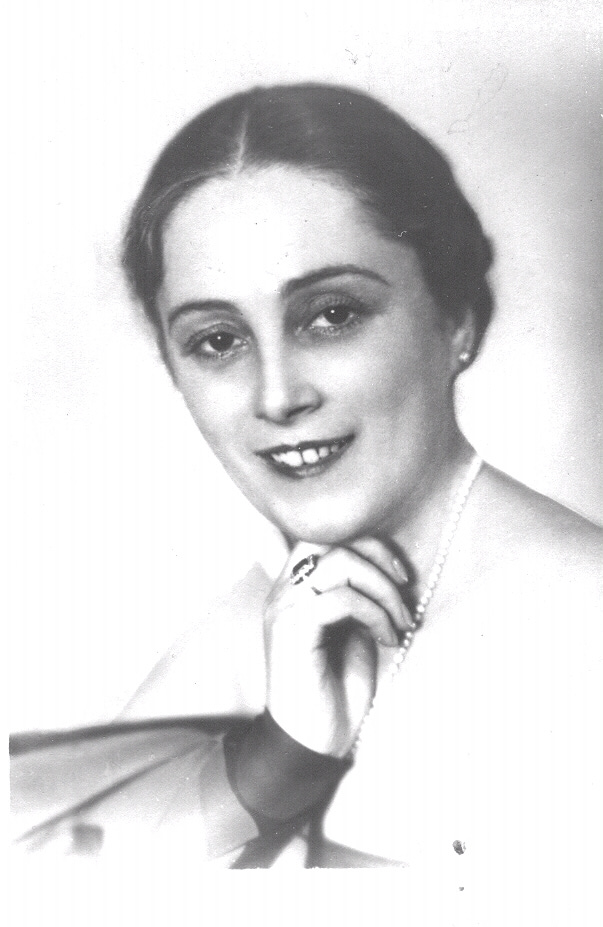
I flipped it over, and saw that Gisela had written a note to her daughter: “Mit Liebe, Deine Mutter” — with love, Your Mother.
Perhaps Gisela had someone deliver the photo with the short message to her daughter. Or maybe this means that in 1931, when my grandmother was 13 years old, she had seen her mother. Either way, Gisela wanted to proclaim that she was — despite everything — still her mother.
***
Nuts to crack:
What happened to Gisela? I haven’t been able to find any records about her after the photo from 1931. There is a different “Gisela Kornhaber” who died in 1935 in Vienna, but she is listed as 76 years old, so I don’t think this is my great-grandmother.
Klara Kornhaber left Vienna in 1931 — I think she probably went back to Drohobycz, where her daughter Anna lived. What happened to Henrietta, Gisela’s younger sister? Were any of the family still in Vienna in 1938, when Austria was annexed by the German Reich?
I remember that photo of Gisela and Andor. I don't think I ever knew (or internalized) who it was, but it takes on a whole new, richer meaning now!
Love the mix of newspaper clips, then & now photos, and Google Maps directions. You weave a fantastic multimedia, multigenerational tale!
Wow! This is very well researched, thoughtt out and written. Such a mystery about Gisella. That she sent my mother that picture with the inscription in 1931 is a revelation. I have seen the photo and always assumed it was my mother. I guess I never looked at the back. I think they must have seen each other after the divorce, Maybe more than just a few times.